Boards traditionally focused on finance, operations, and compliance. Today, technology is a strategic pillar that can determine an organization’s competitive position, risk exposure, and long term sustainability. Understanding the scope of executive technology leadership is no longer optional for boards. It is essential.
Technology influences revenue growth through digital channels, cost structure via automation and cloud economics, risk profile through cybersecurity and data privacy, and competitive positioning by enabling rapid innovation. Every one of these areas sits squarely in the board’s purview.
What Boards Need to Understand About Technology Leadership
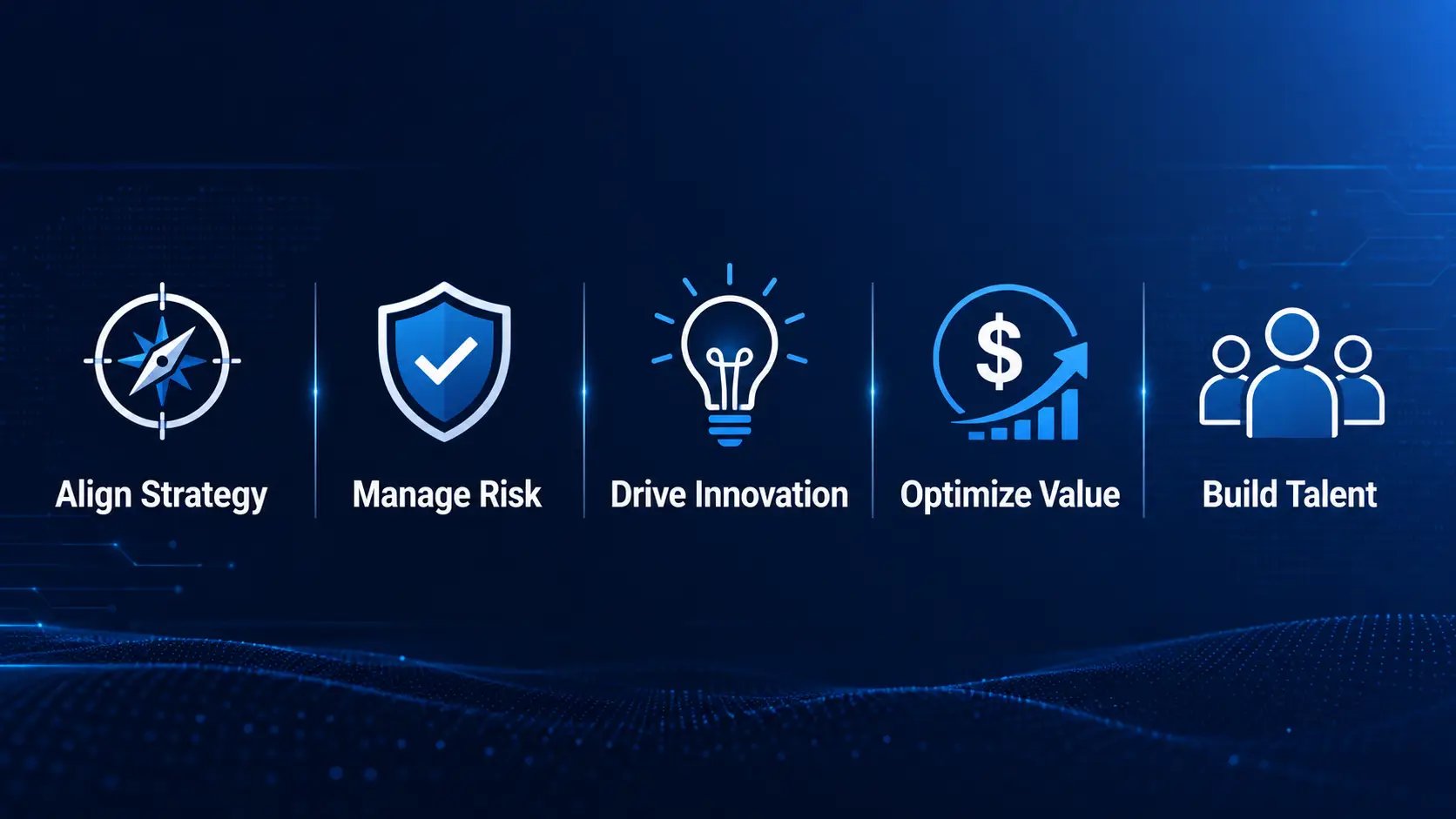
The role of an executive technology leader encompasses far more than keeping systems running. It includes translating corporate strategy into an IT roadmap that delivers measurable business outcomes, overseeing cyber risk and business continuity planning, identifying emerging technologies that can create new revenue streams, managing technology spend with clear ROI accountability, and building the talent pipeline that sustains digital capability over time.
Boards that treat technology as an operational matter rather than a strategic one miss the opportunity to govern one of their most significant assets. The right questions from the board create accountability and drive better decisions at every level of the organization.
The Right Questions to Ask
When meeting with your CIO or technology advisor, boards should be asking questions like these. What are the top three technology initiatives that will drive our strategic priorities this year? How are we protecting critical data and what is our current cyber risk rating? What is the expected ROI and payback period for major technology investments? Which emerging technologies are being evaluated and what is the decision timeline?
These questions shift the conversation from status updates to strategic accountability. They signal to the technology leadership team that the board views technology as a business driver, not a back office function.
Building a Governance Structure That Works
Many boards establish a dedicated Technology Committee or integrate technology oversight into the existing Audit or Risk Committee. Best practices include monthly briefings from the CIO or an external technology advisor, an annual technology strategy review aligned with the corporate plan, and independent third party assessments of cybersecurity posture.
Boards must also balance the tension between innovation and risk. A practical approach is to allocate a portion of the technology budget to exploratory pilots with clear exit criteria and measurable outcomes. This creates room for innovation without abandoning the governance discipline that protects the organization.
Executive technology leadership is no longer a supporting function. It is a core component of boardroom strategy. Boards that stay informed, ask the right questions, and review the right metrics are the ones steering their organizations toward sustainable digital success.
If you are ready to take the next step, book a strategy session and we can work through it together.